Kuka naimisissa Hoifa-Nara, the Step Empress?
Qianlong Emperor naimisissa Hoifa-Nara, the Step Empress . Ikäero oli 6 vuotta, 5 kuukautta ja 14 päivää.
Hoifa-Nara, the Step Empress

The Empress of the Nara clan (11 March 1718 – 19 August 1766), of the Manchu Bordered Blue Banner Nara clan, was an imperial consort of the Qing dynasty. She was second wife of the Qianlong Emperor. Informally known as the Step-Empress, she is one of the most controversial female figures in Chinese history.
She was elevated to empress rank after Empress Xiaoxianchun's death, and in her role as empress, accompanied the Qianlong Emperor on many leisure and hunting trips, as well as ancestral worship ceremonies.
Historical records give little information about her life or even her physical appearance. Because of this lack of documentation, there has been intense speculation among Chinese academicians regarding her historicity and character. It is widely suspected that the Qianlong Emperor destroyed all her records and portraits.
Although never officially deposed, she lost her authority as chief of the imperial harem in 1765, reputedly because she cut her hair, an act that was considered a grave offense according to Manchurian custom. Consequently, the Qianlong Emperor ordered that her four titular imperial edicts, accompanying gifts, and imperial seal be confiscated. After her death, she was not given an imperial funeral or a posthumous name, nor was she buried with the Qianlong Emperor.
Lue lisää...
Qianlong Emperor
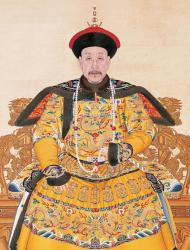
Qianlong, myös Kien-lung tai Kao-tsu (25. syyskuuta 1711 – 7. helmikuuta 1799)lähde? oli mantšulaisen Qing-dynastian kuudes keisari ja neljäs tähän sukuun kuulunut Kiinan hallitsija. Hän oli keisari Yongzhengin poika ja hallitsi vuosina 1735–1796. Vuonna 1796 hän luovutti keisarin asemansa pojalleen Jiaqingille, sillä hän ei halunnut hallita kauemmin kuin maineikas isoisänsä, keisari Kangxi. Vaikka hän virallisesti luopuikin keisarin asemasta, hän jatkoi tosiasiallisesti korkeimpana vallankäyttäjänä kuolemaansa saakka vuonna 1799.
Qianlongin edeltäjien aikana alkanut Kiinan mahtavuuden ja vaurauden kausi jatkui vielä Qianlongin hallituskaudenkin alkupuolella. Kauden lopulla valtakunnassa ilmeni kuitenkin sekä sisäisiä että ulkoisia levottomuuksia.
Lue lisää...